
Reviewed · SIGIRIYA & DAMBULLA DAY TRIPS
Colombo To Polonnaruwa,Dambulla,Sigiriya & Kandy 3 Day Tour
Four UNESCO sites in three days. I love the UNESCO World Heritage focus across Polonnaruwa, Sigiriya, Dambulla and Kandy, and I like the pickup plus air-conditioned vehicle that gets you moving early. The drawback is simple: entrance fees and lunch are not included, so your final spend will be more than the headline price.
What makes this trip feel different from a rushed bus tour is the way you’re meant to explore on your own time at each stop. You get an English-speaking driver and a smooth transport setup, but you’re not locked into a script. One more thing to consider: with a 6:00 am start, you’ll want to treat each day like a full day and plan your energy accordingly.
In This Review
- Key takeaways
- A three-day UNESCO circuit that doesn’t waste your time
- What you’re paying for: transport, driver support, and real flexibility
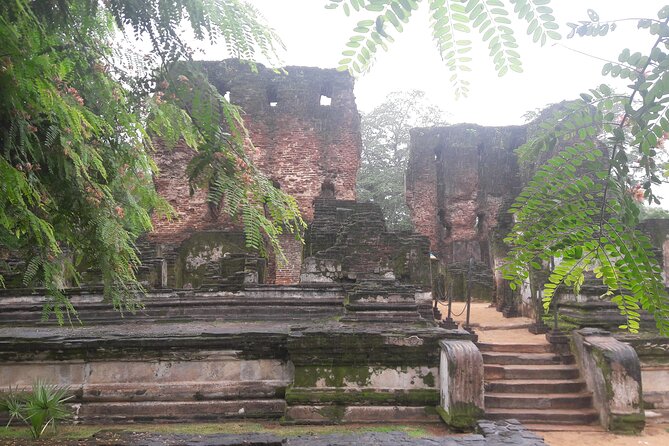
- Day 1 in Polonnaruwa: Royal Palace power and a calmer Vatadage
- Day 2 at Sigiriya and Dambulla: the iconic climb, then the cave world
- Day 3 in Kandy: the Sacred Tooth Relic plus botanical calm
- Ayurveda and spices: the cultural ingredient you shouldn’t skip
- Entrance fees and meals: the budget math that prevents surprises
- Comfort, timing, and pace with a 6:00 am start
- Is $340 good value for this tour?
- Who should book this 3-day loop
- Should you book it or skip it?
- FAQ
- What is included in the Colombo to Polonnaruwa, Dambulla, Sigiriya & Kandy 3 Day Tour?
- Are the entrance fees included?
- What time does the tour start?
- Is this tour private or shared?
- Do I need a guide to visit the sites?
- Is the tour suitable for children?
- Can I change or get a refund after booking?
Key takeaways
- Four UNESCO World Heritage stops across Sri Lanka’s Cultural Triangle and Kandy
- DIY pacing at each site, with transport handled by an English-speaking driver
- Ayurveda, herbs, and spices added to the cultural mix
- AC pickup and drop-off from designated meeting points (start time 6:00 am)
- Entrance fees and meals not included, so budget extra for tickets and lunch
More long days out to Sigiriya and the cave temples
- From Colombo: Sigiriya & Dambulla Day Tour with Safari★ 4.7 · 189 reviews
- Private Day Trip to Sigiriya, cave and National park Safari Tour★ 4.5 · 143 reviews
- From Colombo: Sigiriya and Dambulla Day Trip and Safari★ 4.5 · 132 reviews
- Sigiriya and Dambulla Private Full-Day Tour★ 4.3 · 120 reviews
- Sigiriya Rock and Dambulla Cave All Inclusive Private Day Trip★ 4.5 · 80 reviews
A three-day UNESCO circuit that doesn’t waste your time
This tour strings together four heavyweight sites that Sri Lanka is famous for: Polonnaruwa, Sigiriya, Dambulla, and Kandy. The best part is the flow. Instead of staying in one city for everything, you’re moving along a route where the culture, religion, and landscape all change from stop to stop, and that keeps the days from feeling repetitive.
You also get a practical setup from the moment you start in Colombo. Pickup and drop-off from designated meeting points, plus transport by air-conditioned vehicle, matters a lot in Sri Lanka where heat and traffic can drain patience fast. If you’d rather spend your time staring at ancient architecture instead of negotiating logistics, this is a strong fit.
And because you’re exploring independently, you can move faster when you want photos, slow down when you spot details you like, and stop where your curiosity pulls you.
What you’re paying for: transport, driver support, and real flexibility
The included side is built around comfort and getting you there reliably: fuel surcharge, pickup and drop-off, transport in an air-conditioned vehicle, and an English-speaking driver. There’s also mention of a mobile ticket and confirmation at booking, which is the kind of small modern touch that reduces stress.
The important nuance: the experience is set up for independent exploration without input from a guide. That doesn’t mean you’re left alone with zero help. In practice, an English-speaking driver is still valuable for directions, timing, and general coordination. If you want a hands-on lecture-style guide at every site, this may feel more self-directed than that style.
One detail from past feedback that stands out is that support has been credited to a guide named Terrance (spelled Terans in one note). Even if your day-to-day format is independent, having a name and a face attached to local assistance can be reassuring.
Day 1 in Polonnaruwa: Royal Palace power and a calmer Vatadage
Polonnaruwa is where Sri Lanka’s medieval grandeur shows up without needing explanation. On day one, you start with the Royal Palace area, including the striking remnants of King Parakramabahu’s court-era complex. The feeling here is of scale. Even if you’re not a deep history person, you can read the importance in the layout—space was planned for status and ceremony.
One practical win: the Royal Palace is listed as free for admission, so you avoid one extra ticket on day one. That’s a small but real budget advantage, especially because entrance fees for the other sites are not included.
Next you move to the Polonnaruwa Vatadage. A vatadage is a Buddhist structure type, often circular and designed around a central sacred element. This one is described as well preserved, and it sits in the Dalada Maluwa quadrangle of ruins. If the Royal Palace is about authority and architecture, the Vatadage is about ritual space—more contemplative, more intimate, and a nice change of mood.
A drawback to consider: Polonnaruwa rewards wandering, which is great for independence, but it also means you’ll want comfortable shoes and the patience to read ruins at your own speed. With only the transport handled for you, you’re the one setting the pace.
Up to Kandy and the Temple of the Tooth, and more


Day 2 at Sigiriya and Dambulla: the iconic climb, then the cave world
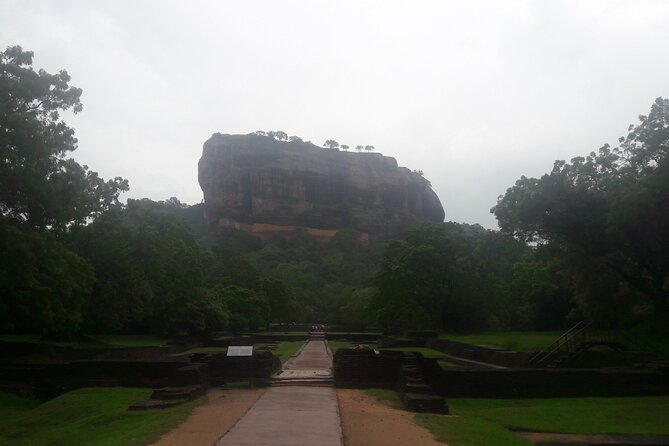
Sigiriya is the Sri Lanka stop almost everyone has heard of. The big reason is obvious: this UNESCO-listed rock fortress is famous for its ancient urban planning and its position in the Cultural Triangle. Even if you show up with just a postcard-level idea, the experience builds once you’re standing there. You start noticing how the site was shaped for defense and spectacle.
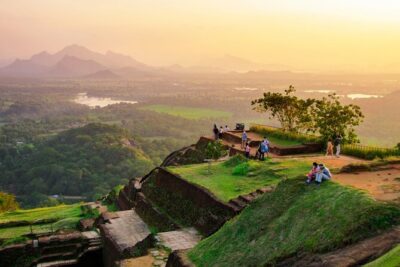
You’ll likely spend a good chunk of the day here, and that’s the right approach. Sigiriya is the kind of place where time disappears fast: stairs, viewpoints, and shifting angles on the rock. You also get a very real payoff for the effort because you can look out over the area in ways you can’t get from street level.
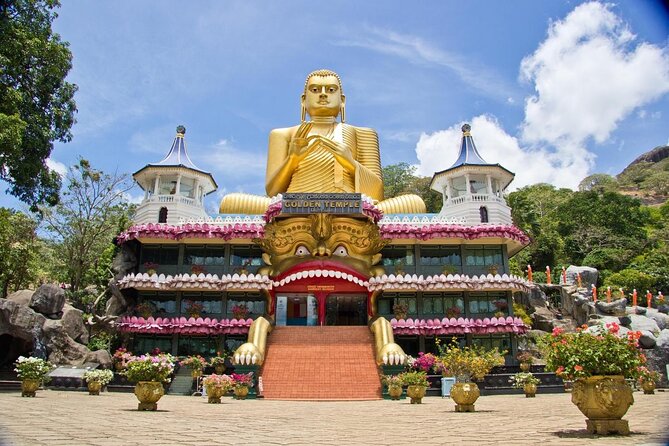
Then day two switches to Dambulla Cave Temple, described as the best-preserved and most extensive cave temple complex in the country. You’re looking at five main caves packed with statues of Lord Buddha, plus figures of kings and statues of Lord Vishnu. The overall effect is a mix of devotion and artistry. If you’re used to temples that are mostly outdoors, the cave setting adds a different kind of mood—cooler, darker, and more concentrated.
Budget note: entrance tickets for these stops are marked not included, so plan for that. Also, because both Sigiriya and Dambulla are major stops, you should assume you’ll be on the go all day. Pack water and consider a hat or light layers.
Day 3 in Kandy: the Sacred Tooth Relic plus botanical calm
Kandy is where the tour slows just enough to feel human again. You start with the Temple of the Sacred Tooth Relic, also called Sri Dalada Maligawa. This is presented as the most sacred Buddhist temple in the world, and it houses the tooth of Buddha in a golden chamber inside the royal palace complex. Even if you’re not religious, it’s hard not to feel the weight of what’s being protected here.
The good part about this stop is that it’s not only about the building. It’s about symbolism and tradition. Kandy’s temple complex context gives the day a sense of continuity: you’ve been moving from ancient sites focused on rulers and rituals, and here you’re in a living religious center.
After the tooth relic, you go to the Royal Botanical Gardens, located about 5 km west of Kandy. This is a change of pace you’ll appreciate if you’ve spent the last two days with monumental ruins and rock formations. The gardens are home to more than 4,000 plant species, including orchids, spices, medicinal plants, and palm trees.
In other words: it’s not just pretty greenery. It matches the tour’s broader theme of plants and traditional knowledge. If you’re curious about how people relate to nature in Sri Lanka—medicinal use, culinary spices, and everyday culture—this is a fitting final stop.
Ayurveda and spices: the cultural ingredient you shouldn’t skip
This tour includes time to learn about Ayurveda, herbs, and spices at an Ayurvedic garden. Even though this isn’t broken out as its own day-long event here, it’s an important cultural thread that ties the trip together.
Why it matters: Ayurveda in Sri Lanka isn’t a museum topic. It’s part of how people think about health, plants, and daily life. An herb-and-spice garden visit also works as a mental reset. After you’ve stared at carved stone and fortress layouts, a plant-focused stop gives your eyes and brain something calmer to process.
Practical expectation: because the garden part isn’t listed with specific caveats like ticket-free or not included, you should assume it may have its own small entry or purchasing options. The tour explicitly says entrance fees aren’t included, so double-check what applies to the garden visit and what you’ll pay on site.
Entrance fees and meals: the budget math that prevents surprises
The tour price is $340 per person, and transport is included. But the big add-on is clear: entrance fees are not included, and lunch or other meals and drinks are available to purchase.
That matters because UNESCO sites typically have ticket costs that stack up quickly, especially when multiple stops are marked not included. A single afternoon’s worth of tickets can change the feel of the deal, so do the math before you book.
The good news: one stop is listed as ticket free—the Polonnaruwa Royal Palace area. That’s a small win that helps offset at least one extra charge.
For meals, you’ll want a simple plan. If you skip lunch, you’ll feel it by late afternoon. If you eat at random places without checking menus, costs can spike. The practical middle: keep it easy—grab lunch near a site when hunger hits, and then carry water so you’re not paying inflated prices repeatedly throughout the day.
Comfort, timing, and pace with a 6:00 am start
You start at 6:00 am. That’s early, yes. But it’s also the reason the itinerary can fit major sites in three days. Mornings are when heat is lower, light is better for photos, and crowds can be a bit more manageable.
The days are built around long site blocks—each stop is described as about 5 hours. That’s not a quick glance tour. You’ll actually have time to walk, pause, and decide what you want to focus on. Independence helps here. If you like details, you’ll find them. If you prefer the highlights, you can move efficiently.
What I’d watch for: a 5-hour stop doesn’t mean you’ll sit still. It usually means walking, climbing stairs, and moving between viewpoints. Sigiriya in particular can be physically demanding compared with flatter ruins. So bring shoes that grip, and don’t plan on wearing something you’d hate after hours of walking.
Is $340 good value for this tour?
At $340 per person, this tour sits in the practical middle: you’re paying for transport from Colombo, pickup and drop-off, and an air-conditioned vehicle plus fuel support. You’re also paying for a route that hits four UNESCO destinations in three days without forcing you into a constant guide-driven script.
Here’s the value logic I use:
- If you’d have to hire separate drivers or piece together transfers yourself, the bundled transport alone can justify the cost.
- The independent exploration format means you’re not paying only for narration—you’re paying for access and time.
- The biggest subtraction is the extra budget you’ll spend on entrance tickets and meals since they’re not included.
So for value, I’d say this works best if you’re comfortable budgeting for tickets and you want the convenience of someone handling the driving and pickup. If you prefer a full guided lecture with every entrance fee included, you may find better fits elsewhere.
Who should book this 3-day loop
You should strongly consider this tour if:
- You want UNESCO highlights across Polonnaruwa, Sigiriya, Dambulla, and Kandy in a tight timeframe.
- You like moving at your own speed rather than following a nonstop guide script.
- You’d appreciate an English-speaking driver and air-conditioned transport to reduce daily stress.
You might think twice if:
- You dislike early starts. 6:00 am pickup means you’ll be up and ready.
- You’re hoping for entrance fees and meals to be fully covered.
- You want a guide to actively explain every site detail while you walk.
This is ideal for couples and families who can share the driving-day workload emotionally, even if the physical walking is still yours. It also suits solo travelers who enjoy structure for logistics but freedom for sightseeing.
Should you book it or skip it?
I’d book this tour if you want a clean, efficient UNESCO sampler with enough time at each place to actually enjoy it. The best part is the mix: major cultural power (Polonnaruwa, Sigiriya, Dambulla) plus Kandy’s sacred focus and then a calmer botanical end.
Just go in with one expectation set: entrance fees and lunch are extra. If you do that, the $340 price feels fair for what you get—transport comfort, driver support, and a route that hits the Sri Lanka classics.
If you’re the kind of traveler who hates logistical decisions and loves simple structure, this tour style matches you. If you want fully guided explanations and all costs included, you may want to compare other options before committing.
FAQ
What is included in the Colombo to Polonnaruwa, Dambulla, Sigiriya & Kandy 3 Day Tour?
It includes fuel surcharge, an English-speaking driver, pickup and drop-off from designated meeting points, and transport by air-conditioned vehicle. The tour also offers a mobile ticket, and it’s described as a private tour/activity for your group.
Are the entrance fees included?
No. Entrance fees are listed as not included. One area in Polonnaruwa (the Royal Palace) is shown as free, but the other main site entries are marked not included.
What time does the tour start?
The start time is 6:00 am.
Is this tour private or shared?
It’s described as private, meaning only your group will participate.
Do I need a guide to visit the sites?
You explore independently at your own pace, without input from a guide. An English-speaking driver supports the transport side and general coordination.
Is the tour suitable for children?
Children must be accompanied by an adult. The tour states that most travelers can participate.
Can I change or get a refund after booking?
No. The experience is non-refundable and cannot be changed for any reason.
If you want, tell me your travel month and whether you prefer early mornings or a slower pace, and I’ll suggest how to plan tickets and lunch breaks so the days feel easier.
Deeper Into the Ancient Cities
- Rustic taste & Cultural tales Food Tour Colombo
★ 5.0 · 43 reviews - Cultural Triangle of Sri Lanka
★ 5.0 · 38 reviews - Sigiriya, Polonnaruwa & Dambulla “Trilogy” Day Tour from Colombo
★ 4.5 · 26 reviews - Day Tour from Colombo to Sigiriya, Dambulla & Polonnaruwa
★ 4.5 · 21 reviews - Three Ancient Kingdoms Tour | from Colombo
★ 5.0 · 18 reviews
The Road to Kandy Continues
- From Colombo: Kandy Temples and Pinnawala Full-Day Tour
★ 4.6 · 144 reviews - From Colombo: Kandy, Pinnawala and Tea Factory Full-Day Trip
★ 4.4 · 99 reviews - Kandy City Tour by Lux Tours Lanka
★ 5.0 · 92 reviews - 03 Days Highlights Of Sigiriya,Kandy,Nuwara Eliya ,Ella & Udawalawe
★ 5.0 · 61 reviews - Private Day trip Kandy & pinnawala with your selected attractions
★ 5.0 · 53 reviews
Rock and Cave, One More Time
- From Colombo: Sigiriya & Dambulla Day Tour with Safari
★ 4.7 · 189 reviews - Private Day Trip to Sigiriya, cave and National park Safari Tour
★ 4.5 · 143 reviews - From Colombo: Sigiriya and Dambulla Day Trip and Safari
★ 4.5 · 132 reviews - Sigiriya and Dambulla Private Full-Day Tour
★ 4.3 · 120 reviews - Sigiriya Rock and Dambulla Cave All Inclusive Private Day Trip
★ 4.5 · 80 reviews
Just added to the Colombo pages

Sigiriya & Dambulla Day Trips, compared.
 ★ 4.7From Colombo: Sigiriya & Dambulla Day Tour with SafariFrom $48189 reviews
 ★ 4.5Private Day Trip to Sigiriya, cave and National park Safari TourFrom $68143 reviews
 ★ 4.5From Colombo: Sigiriya and Dambulla Day Trip and SafariFrom $70132 reviews
 ★ 4.3Sigiriya and Dambulla Private Full-Day TourFrom $66120 reviews
 ★ 4.5Sigiriya Rock and Dambulla Cave All Inclusive Private Day TripFrom $5580 reviews
 ★ 4.5Sigiriya Rock Fortress and Cave Temples Day TripFrom $5573 reviews
 ★ 5.003 Days Highlights Of Sigiriya,Kandy,Nuwara Eliya ,Ella & UdawalaweFrom $26561 reviews
 ★ 4.5Dambulla & Sigiriya Day Tour from Colombo / Negombo with LunchFrom $6957 reviews
Browse the lists this tour appears in