
Reviewed · NEGOMBO TOWN & BEACH TOURS
From Negombo: City Tour & Fishing Village Tour by Tuk-Tuk
Negombo is the kind of city you feel fast, not slow. This 4-hour tuk-tuk city tour packs you into the sights that shape coastal Sri Lanka: the Lellama seafood market energy, then the sacred drama of Angurukaramulla Temple. I especially liked having a proper guide to translate what I was seeing at St. Mary’s Church and Sri Singama Kali Amman Kovil, not just snapping photos. One thing to plan around: on major religious days, certain stops (like the fish market) can be closed or change, so your route may shift.
I also love how practical this feels. Hotel pickup and drop-off cover multiple areas around Negombo (Waikkal, Kammala, Negombo, Wattala, and Katunayake), and the whole plan runs in the most reasonable time window if you’re not trying to spend your day in a car. The live guide is English, and you’ll move through places where local life is happening, not just staged viewpoints.
If you’re sensitive to heat and standing/walking time, wear comfy shoes. A couple of sites involve walking through temple areas and photo stops, and late morning sun can be strong.
In This Review
- Key highlights to know before you go
- Why Negombo works for a 4-hour tuk-tuk plan
- Lellama seafood market: morning energy at the waterline
- St. Mary’s Church and Sri Singama Kali Amman Kovil: two faiths, one street-level view
- Hamilton Canal: a 14.5 km reminder of how trade shaped the coast
- Negombo Dutch Fort: Portuguese origins plus Dutch design logic
- Angurukaramulla Temple: dragon mouth and a mossy library ruin
- Timing, breaks, and the reality of closed stops
- Price and logistics: what $40 really buys you
- Your guide makes a difference: English explanations that stick
- Who this tour suits best (and who might want to rethink it)
- Should you book the Negombo City Tour & Fishing Village Tour by Tuk-Tuk?
- FAQ
- How long is the Negombo City Tour & Fishing Village Tour by Tuk-Tuk?
- Where does pickup start?
- What are the main places you’ll visit?
- Is the tour guide English-speaking?
- Is this a private tour or a group tour?
- What’s included in the price?
- What should I bring with me?
- Where will I be dropped off?
- Is free cancellation available?
- Can I reserve now and pay later?
Key highlights to know before you go
- Lellama seafood market: see fishermen bring in the day’s catch and watch the bustle up close
- St. Mary’s Church: a Portuguese-era Christian landmark, with construction resumed in 1874 and completed in 1922
- Sri Singama Kali Amman Kovil: Hindu temple murals and sculptures that reward slow looking
- Hamilton Canal: a British-built waterway (14.5 km) that connects Puttalam with Colombo
- Angurukaramulla Temple: dragon’s mouth entrance plus a 300-year-old moss-covered ruin of an ancient library
Fort, Pettah, Galle Face: more ways to see the city
- Half-Day Negombo City Tour with Ayurvedic Massage & Local Lunch★ 5.0 · 87 reviews
- Negombo City Tour by Tuk Tuk with hotel pickup★ 5.0 · 42 reviews
- Colombo Airport (CMB) to Colombo City Private Transfer★ 4.5 · 26 reviews
- Negombo City Tour by Tuk Tuk★ 5.0 · 20 reviews
- Negombo: Guided City Tour by Tuk Tuk with Hotel Pickup★ 4.7 · 20 reviews
Why Negombo works for a 4-hour tuk-tuk plan
Negombo sits right by the water, and its personality shows up quickly. Even if you only have a morning, this tour gives you a strong sense of what the city runs on—religion, trade, and fishing—without turning it into a full-day marathon.
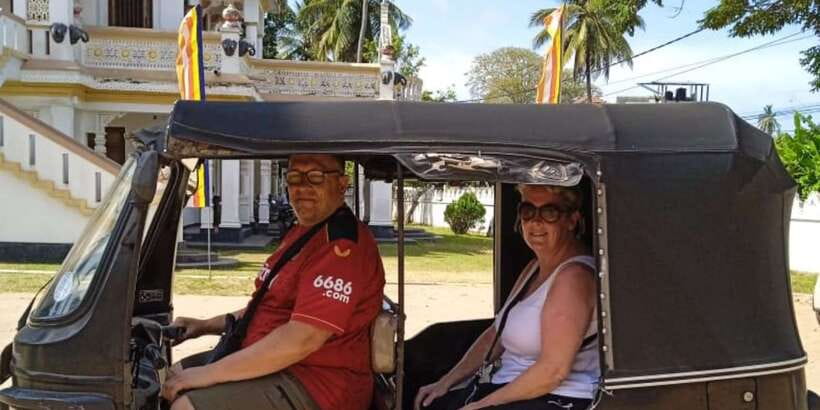
You’ll spend most of the time going from one meaningful stop to the next, with breaks built in for photos and short downtime. Because it’s a private group, the pace feels more human than most group tours. And if your party is larger, you may be split across several tuk-tuks so everyone keeps moving.
It’s also a good first contact with Sri Lanka’s mix of communities. You’re not just visiting one “type” of place; you’re bouncing between Christian and Hindu sites, then into the colonial-era corners tied to Portuguese and Dutch influences.
Lellama seafood market: morning energy at the waterline
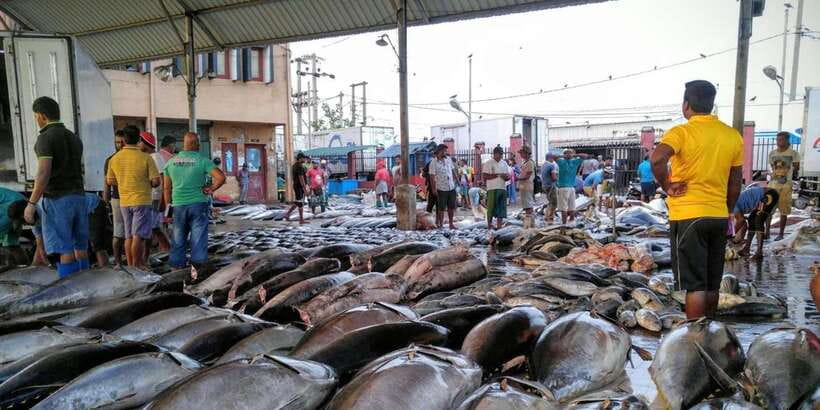
Your tour starts at the Lellama area seafood market, where the day’s rhythm is obvious before anyone even talks. The big draw here is not a museum-style exhibit—it’s the real working scene. You’ll see local fishermen bringing in the day’s catch, and the market atmosphere has that steady bustle you only get when people are selling fresh produce and seafood.
This is also one of the easiest stops to enjoy with almost zero effort. You don’t need to know names of boats or species to understand what’s going on. You just follow your guide’s cues, look where they point, and let the smells and movement do the storytelling.
A practical note: on a day like Good Friday, the fish market can close. In that case, your guide can swap in other sights to keep the morning full—so don’t panic if your schedule feels slightly different. The key is that you’ll be told early, not left guessing.
If you plan to take photos, remember that fishermen and sellers are working. Keep your movements respectful, ask before you get too close, and use your zoom instead of crowding someone’s space.
St. Mary’s Church and Sri Singama Kali Amman Kovil: two faiths, one street-level view
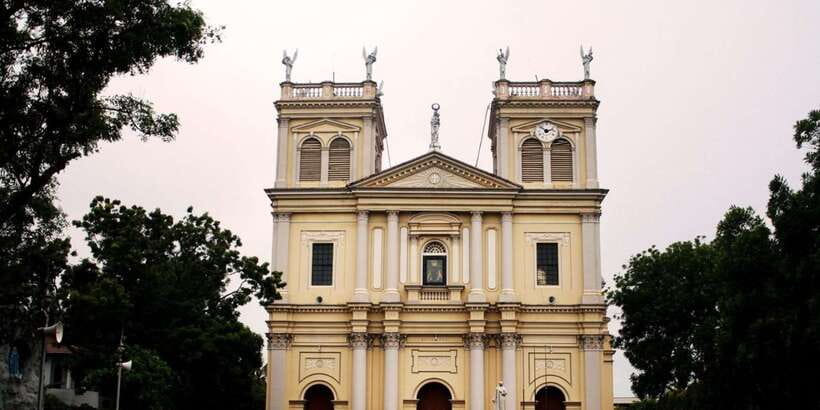
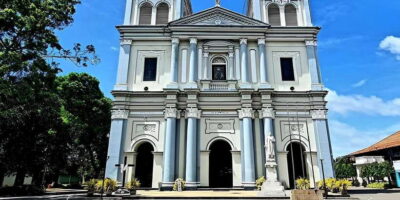
After the market, you head into Negombo’s Christian heritage at St. Mary’s Church. This isn’t just a pretty building stop. The guide-led context matters because you’ll learn how the church’s story connects to Portuguese colonial influence. Construction resumed in 1874 and the church was completed in 1922, so you’re looking at a landmark shaped over time rather than something that magically appeared overnight.
Then comes Sri Singama Kali Amman Kovil, a Hindu temple with murals and sculptures that make you slow down. This is the kind of place where you notice details once you start looking—colors, carvings, and the overall visual language of devotion. Your guide’s job is to point you toward what to watch for, so you don’t walk through like you’re late for coffee.
I like pairing these stops back-to-back because it gives you an immediate comparison. In one part of the tour you’re reading the past through church architecture and community memory. In the next, you’re seeing the present through temple art and religious practice. It’s not just “two sites”—it’s two different ways people mark meaning in daily life.
Dress-wise, treat both places with respect. Light layers help because you’ll likely go from shade to open sun during breaks and transfers.
More three-wheeler runs through the Negombo streets


Hamilton Canal: a 14.5 km reminder of how trade shaped the coast
Next up is Hamilton Canal, a 14.5 km waterway connecting Puttalam with Colombo. This stop is one of the best examples of why this tour is more than a photo run. The canal was built by the British in 1802, and it played a role in transport and trade.
You might not think of canals as “tourist attractions,” but that’s exactly why it’s worth seeing with a guide. You get a real sense of how geography becomes economics. A water route like this changes where goods move and how communities grow.
Expect this stop to feel quieter than the fish market. It’s not meant to be frantic. Instead, it helps you understand why coastal Negombo has long been tied to movement—ships, goods, and the people who keep it running.
Negombo Dutch Fort: Portuguese origins plus Dutch design logic

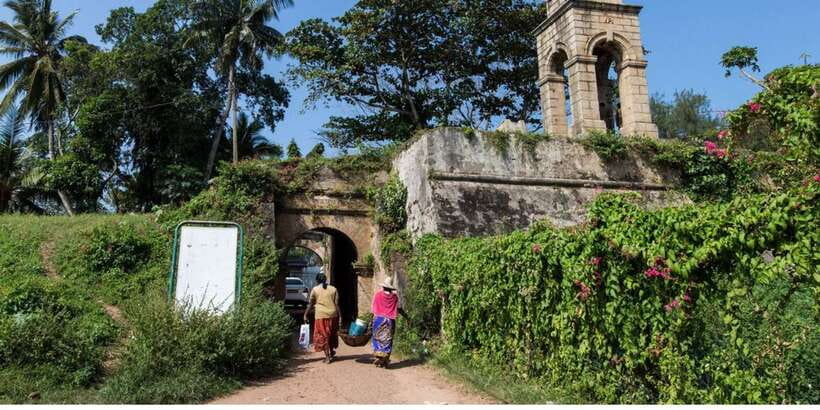
The Negombo Dutch Fort is where the colonial layers start to feel physical. The fort originally traces to Portuguese construction, and later the Dutch rebuilt it into a pentagonal shape in the 1640s.
What I like about this stop is how the geometry gives you something to look at. Even if you’re not into fortifications, a pentagonal layout is easy to follow, and your guide can point out how the structure reflects defense needs and how European powers adapted existing sites.
This also works well for photos. If the sun is high, you can still get good angles by standing back and letting lines and edges do the work. The fort is a reminder that Negombo isn’t only fishing and churches. It has long been connected to outside influence, especially through sea-based trade.
Angurukaramulla Temple: dragon mouth and a mossy library ruin
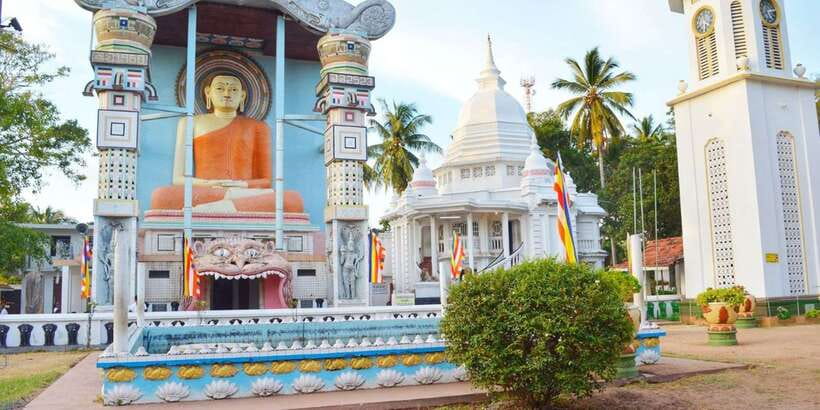
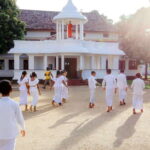
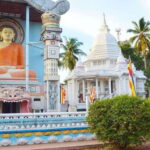
The final stop is Angurukaramulla Temple, one of Negombo’s well-known temples. The entrance includes a dragon’s mouth, which is the kind of detail that instantly makes the site feel dramatic and memorable. It’s also tied to local beliefs about warding off evil spirits, so it’s not just decoration.
Inside, you’ll also learn about a 300-year-old moss-covered ruin of an ancient library within the temple premises. That’s a special kind of detail: it takes you from everyday temple life to the idea that this place held knowledge and learning long before modern classrooms existed.
This stop tends to be the “wow” moment of the tour. You’ll take photos, but try to also slow down and look at textures—the moss, the age of the structure, and the way the temple space is used.
If you’re with a guide who explains things clearly, this is where the whole morning clicks. Your guide turns what could be a quick visit into something you understand.
Timing, breaks, and the reality of closed stops
The day runs about 4 hours. Pickup starts around 08:00, and the first main stop is at 08:30. You’ll see a schedule built around site visits with photo stops and breaks.
That structure matters because it keeps the tour from feeling rushed. You get enough time at each stop to see what you came for, without feeling like you’re getting dragged through like luggage.
Closed stops can happen, especially around major religious holidays. One guide strategy stands out: guides can adjust early and add replacement sites so your morning doesn’t end early. For example, on Good Friday, a fish market closure doesn’t automatically ruin the day. Your guide can shift the plan and include other meaningful places, such as St Sebastian Church, which has appeared as a replacement in at least one experience.
So the best approach is simple: trust your guide’s plan for the day, and keep your expectations flexible. A good tour doesn’t look identical every morning. It looks good even when life changes.
Price and logistics: what $40 really buys you
At $40 per person, the value comes down to what’s included and how smoothly the day runs.
Your tuk-tuk transport covers hotel pickup and return, with multiple pickup and drop-off areas around Negombo. You’re not negotiating rides in traffic or trying to solve parking. Parking fees are also covered, along with driver charges and fuel surcharge, so your day stays predictable.
You also get entrance fees for the sightseeing stops named in the program. That matters in Sri Lanka, where small entry costs can add up once you start stacking attractions.
On top of that, you get refreshments and water during the tour, plus all government taxes included. In other words: the price is not just a headline. It’s built to be the full experience cost for the day.
Private-group comfort is another value piece. This tour is listed as a private group, which usually means more control of pace and fewer headaches about who wants what at each stop. One experience noted a party of eight moving across four tuk-tuks, which shows how the provider keeps the group moving rather than forcing everyone into one uncomfortable vehicle.
Your guide makes a difference: English explanations that stick
The tour uses a live English-speaking guide, and that can change everything in places like temples and forts where details matter.
I also love hearing real guide names because it signals consistency and competence. In one experience, Samantha guided the morning through the major Negombo sites, sharing interesting facts along the way and handling Good Friday closures by adjusting the plan. Another experience highlighted Fernando and Simon as drivers/guides, and the group emphasized how informative the morning felt—especially around the fish markets and the emotional weight of a church stop like St Sebastian Church when it was included.
Even when the tour is only four hours, a strong guide can turn quick stops into real understanding. And if your guide takes photos too, that’s a nice bonus.
Who this tour suits best (and who might want to rethink it)
This tour is ideal if you:
- Want a fast, culture-and-coast mix without long travel time
- Like guided context at religious and historical sites
- Are staying around Negombo and want a clean way to get around by tuk-tuk
It may be less ideal if you:
- Want a very relaxed pace with lots of free wandering time
- Get uncomfortable with standing, sun exposure, or short walks between stops
- Prefer hands-on fishing experiences, because this tour focuses more on viewing and understanding than on direct fishing participation
That said, the overall structure makes it forgiving. You’ll have breaks, photo stops, and short windows to reset.
Should you book the Negombo City Tour & Fishing Village Tour by Tuk-Tuk?
If your goal is a smart introduction to Negombo in one morning, I think you should book this. The combination works: fishing market energy, major religious landmarks (including both St. Mary’s Church and Sri Singama Kali Amman Kovil), colonial-era sites like Hamilton Canal and the Dutch Fort, and a memorable finale at Angurukaramulla Temple.
It’s also one of the better-value ways to spend half a day because transport, entrances, parking, water, and taxes are folded into the price. You get less hassle and more time looking at what matters.
Just go in with one mindset: conditions may change on religious holidays, and your guide will adapt. If you’re flexible and respectful at each stop, this is the kind of tour you’ll remember for the right reasons.
FAQ
How long is the Negombo City Tour & Fishing Village Tour by Tuk-Tuk?
It runs for about 4 hours.
Where does pickup start?
Pickup is available from hotels in Waikkal, Kammala, Negombo, Wattala, and Katunayake.
What are the main places you’ll visit?
The tour includes Lellama seafood market, St. Mary’s Church, Sri Singama Kali Amman Kovil, Hamilton Canal, Negombo Dutch Fort, and Angurukaramulla Temple.
Is the tour guide English-speaking?
Yes, the tour includes a live English guide.
Is this a private tour or a group tour?
It’s a private group.
What’s included in the price?
Hotel pickup and drop-off by tuk-tuk, entrance fees for the listed sights, fuel surcharge, driver charges, parking fees, refreshments and water, and government taxes.
What should I bring with me?
Bring a charged smartphone and either a passport or an ID card (a copy is accepted).
Where will I be dropped off?
Drop-off is available at Waikkal, Negombo, Wattala, Katunayake, and Kammala.
Is free cancellation available?
Yes, you can cancel up to 24 hours in advance for a full refund.
Can I reserve now and pay later?
Yes, it offers reserve now & pay later, so you can book without paying immediately.
More of Negombo
- Motorcycle Rental in Negombo
★ 5.0 · 103 reviews - Half-Day Negombo City Tour with Ayurvedic Massage & Local Lunch
★ 5.0 · 87 reviews - Negombo City Tour by Tuk Tuk with hotel pickup
★ 5.0 · 42 reviews - Negombo Day Tour
★ 5.0 · 37 reviews - Fun and Scenic Negombo Tour by Tuk Tuk
★ 5.0 · 33 reviews
Keep the Three-Wheeler Running
- Negombo City Tour by Tuk Tuk with hotel pickup
★ 5.0 · 42 reviews - Fun and Scenic Negombo Tour by Tuk Tuk
★ 5.0 · 33 reviews - Negombo: Private Half-Day Tuk-Tuk Tour with Hotel Transfers
★ 5.0 · 31 reviews - Negombo: Guided City Tour by Tuk Tuk with Hotel Pickup
★ 4.7 · 20 reviews - Negombo City Tour by Tuk Tuk
★ 5.0 · 20 reviews
The City, a Few More Ways
- Half-Day Negombo City Tour with Ayurvedic Massage & Local Lunch
★ 5.0 · 87 reviews - Negombo City Tour by Tuk Tuk with hotel pickup
★ 5.0 · 42 reviews - Colombo Airport (CMB) to Colombo City Private Transfer
★ 4.5 · 26 reviews - Negombo: Guided City Tour by Tuk Tuk with Hotel Pickup
★ 4.7 · 20 reviews - Negombo City Tour by Tuk Tuk
★ 5.0 · 20 reviews
Just added to the Negombo pages


Negombo Town & Beach Tours, compared.
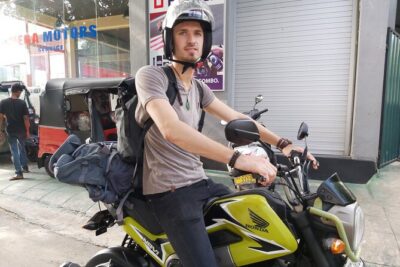 ★ 5.0Motorcycle Rental in NegomboFrom $17103 reviews
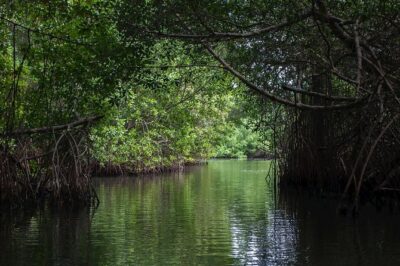 ★ 5.0Half-Day Negombo City Tour with Ayurvedic Massage & Local LunchFrom $5287 reviews
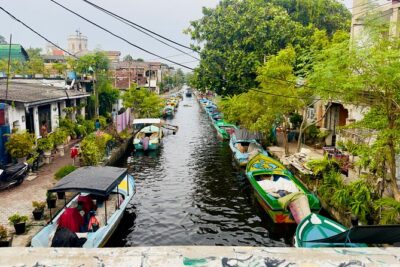 ★ 5.0Negombo City Tour by Tuk Tuk with hotel pickupFrom $2542 reviews
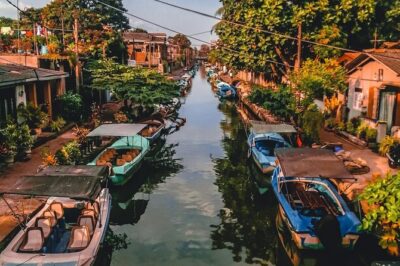 ★ 5.0Negombo Day TourFrom $3537 reviews
 ★ 5.0Fun and Scenic Negombo Tour by Tuk TukFrom $2533 reviews
 ★ 5.0Galle Day Tour from Colombo or Negombo by Private Car , Van with DriverFrom $8031 reviews
 ★ 5.0Negombo: Private Half-Day Tuk-Tuk Tour with Hotel TransfersFrom $4231 reviews
 ★ 4.7Negombo Heritage Walking TourFrom $1427 reviews
Browse the lists this tour appears in