
Reviewed · MARKET & CURRY COOKING CLASSES
Cooking Classes in Sri Lanka
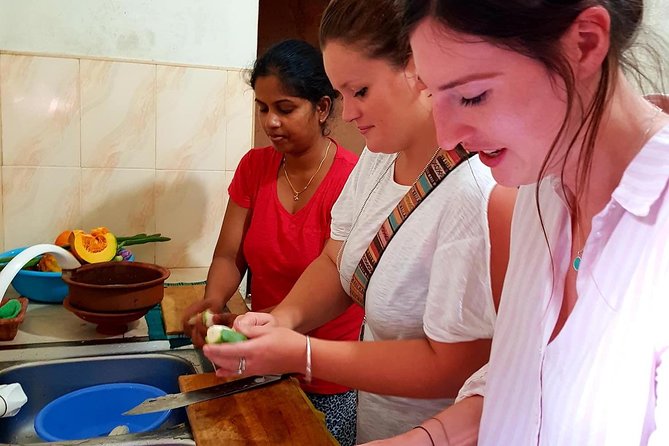
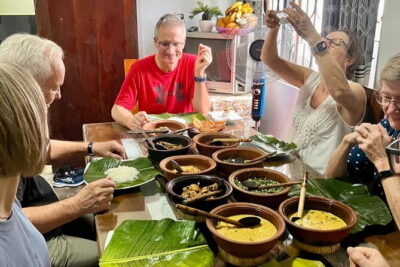
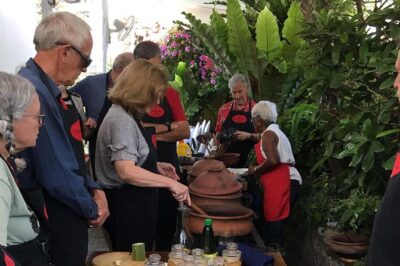
A curry lesson at a real family table. This private Sri Lankan cooking class in Negombo is interesting because it’s hosted inside a family home, with a local showing you the everyday way people cook—not a demo-and-leave setup. You’ll learn by doing, asking questions as you go, and eating what you make with the people who taught you.
What I like most is how you get hands-on with the foundations, especially coconut milk and curry flavors. You also get to make things like fresh coconut sambal and dhal, then finish with a traditional dessert as dinner. One possible drawback: this is taught as a learn-by-cooking experience, so if you expect lots of written recipes to take home, you may be disappointed.
In This Review
- Key Things You’ll Notice Right Away
- Why Negombo’s Family-Table Cooking Feels Different
- Tea, Coconut Milk, and Your First Real Lesson
- Spices, Herbs, Curry, and Rice: How the Flavors Build
- Cutting Vegetables and Choosing Your Curry (Yes, You Do the Work)
- Dinner at the Host’s Table, Plus Traditional Dessert
- Market Visit Upgrade: When Ingredient Choice Changes the Class
- Price and Value: What $45 Buys You in Real Cooking Skill
- Who This Cooking Class Best Fits (And Who Might Skip)
- Quick Tips Before You Go
- Should You Book This Cooking Class in Negombo?
- FAQ
- Where is the cooking class located, and where does it end?
- How long is the experience?
- Is this a private tour or shared group experience?
- Is there a welcome drink?
- What do I cook during the class?
- Can I choose vegetables for my curry?
- Do I learn about Sri Lankan spices and herbs?
- Is there an optional market visit?
- Is the experience suitable for vegetarians and non-vegetarians?
- What’s the weather and cancellation situation?
Key Things You’ll Notice Right Away
- Welcome tea or coffee before you start, so the experience feels relaxed, not rushed
- Hands-on coconut milk basics that set the tone for everything else you cook
- Cut and chop your own vegetables, including choosing what goes into your curry
- Spices and herbs explained during cooking, not in a separate lecture
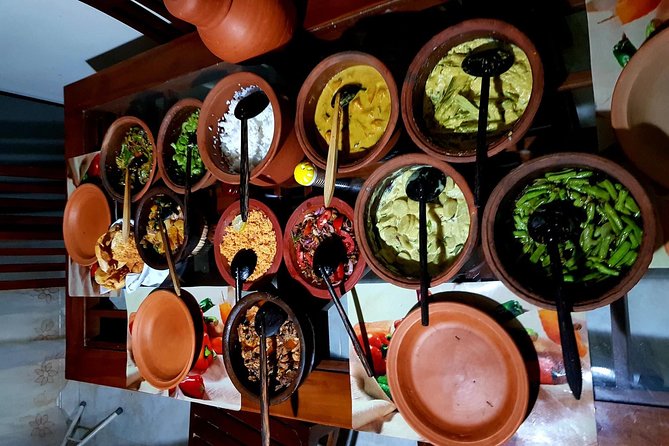
- Dinner at the host’s table, so you taste what you just made while it’s fresh
- Optional market visit upgrade if you want a more ingredient-first experience
Market-to-table cooking classes worth a morning
- Cooking Classes in Sri Lanka★ 5.0 · 110 reviews
- Negombo Private Tour: Market, Temples & Canal★ 4.9 · 15 reviews
- Cooking Class and Market Visit in Negombo★ 5.0 · 4 reviews
Why Negombo’s Family-Table Cooking Feels Different
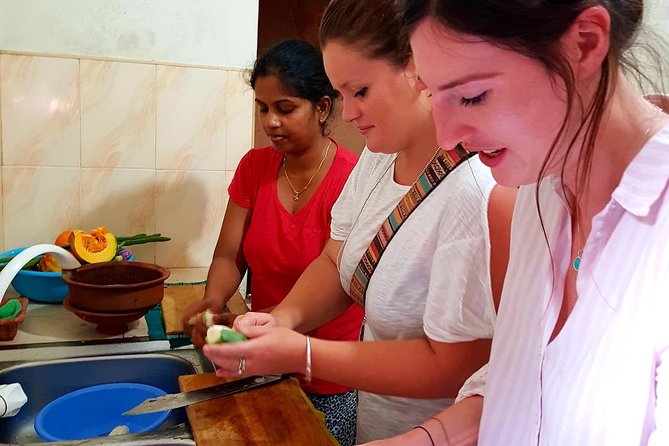
Negombo is a smart base for a cooking class because you’re not only learning food—you’re learning a home rhythm. This experience is built around a private dinner at a family home, so the day-to-day details matter: how ingredients are handled, how heat is managed, and how flavors are balanced while you’re still standing over the pan.
You’ll start with a welcome drink (tea or coffee). That small thing signals the pace: you’re not herded through a system. It also helps you settle in right where the cooking happens, instead of meeting a group somewhere impersonal and then traveling to a studio kitchen.
The private format is a big value point. You can ask questions in real time, and your host can adjust what you’re doing to your comfort level. That makes a difference for first-time cooks who might otherwise feel lost with cutting, grating, or seasoning.
Tea, Coconut Milk, and Your First Real Lesson
Expect the class to begin with your host setting the stage, then moving quickly into basics. You’ll get an idea of how to make coconut milk—not just when to add it, but the approach locals use so it tastes right and behaves right in a curry.
From there, the cooking becomes practical. You’ll choose vegetables for your curry (and yes, if you’re veggie or non-veggie, this is designed to work for both). Then comes the part that usually makes people happiest: you cut and chop the vegetables yourself. Even if you’ve cooked before, this is where the class turns from information into skill.
You also get guidance on Sri Lankan spices and herbs as you go. This is where your “why” questions get answered—how spice blends come together, how herbs smell when they’re fresh, and how the timing affects the final taste. Instead of memorizing steps, you learn the logic of layering flavors.
If you’re the type who likes to understand what’s happening, this lesson style helps you replicate the approach later—even when the ingredient list changes.
Spices, Herbs, Curry, and Rice: How the Flavors Build
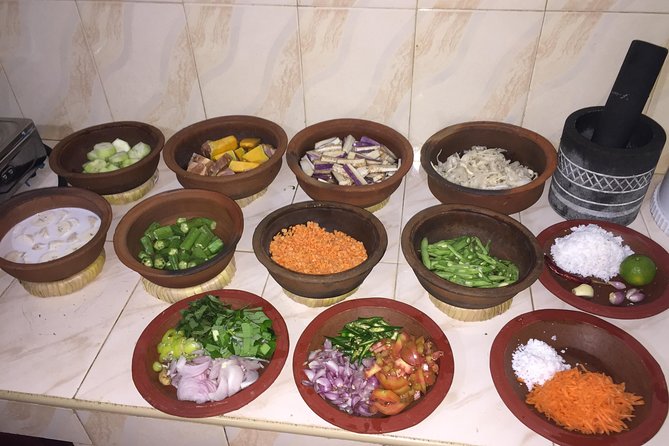
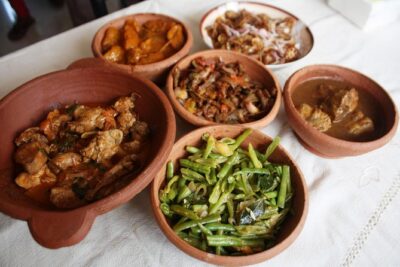
The core of the meal is classic Sri Lankan home cooking: curry, rice, coconut milk, and other treats. The best part is that it’s not a single “curry night” recipe. It’s more like a guided set of building blocks that explain how the flavors interact.
When you learn the spices and herbs in the middle of cooking, you pick up a key skill: timing and temperature. Spices aren’t just “added”—they’re cooked and worked into the dish. That’s why the same ingredients can taste very different depending on when they hit the pot.
You’ll also cook rice, and that matters because rice is part of how you judge the curry. Curry that tastes balanced when you’ve eaten it with rice tells you your seasoning is right. And because you’ll eat what you make, you’ll get instant feedback on flavor, not just a class “win.”
Based on what people highlight, the class tends to deliver on flavor variety. One described making fresh coconut sambal and dhal together, which is a strong sign that you’re not just learning one dish and calling it a day.



Cutting Vegetables and Choosing Your Curry (Yes, You Do the Work)
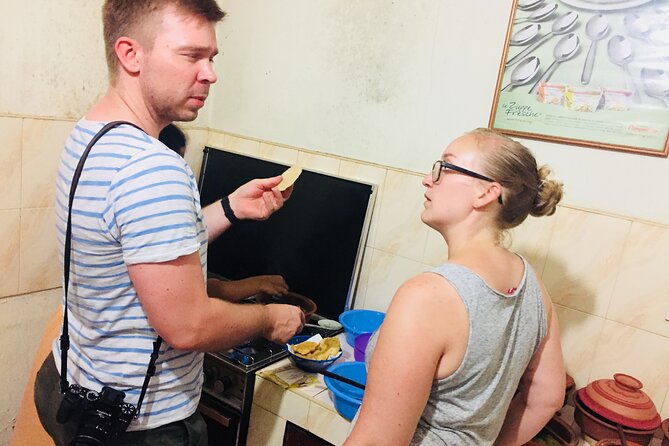
You don’t watch while someone else does the prep. You’re expected to handle the vegetables yourself—cutting, chopping, and preparing what you’ll cook. That’s not just “hands-on for fun.” It’s how you learn the basics that actually change the meal: bite size, cooking speed, and how well ingredients absorb sauce.
You also get to choose vegetables for your curry. That keeps the cooking personal and makes it easier to adapt to your preferences. If you’re traveling and want to eat something you recognize, choosing your vegetables helps you land in familiar territory while still learning the Sri Lankan approach.
A small practical note: chopping can take longer than you expect if you’re not used to working quickly on a busy prep style. The class runs about 3 hours, so don’t plan on chatting only—you’ll want to stay engaged so you finish cooking and eating on time.
Dinner at the Host’s Table, Plus Traditional Dessert
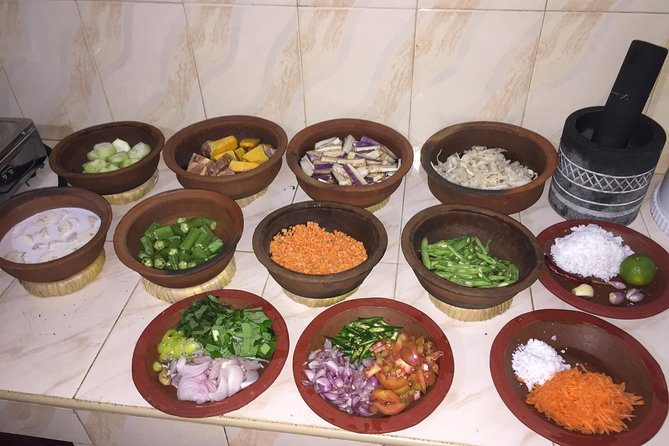
This is not a “quick meal in the lobby” kind of class. You sit down to enjoy the dinner you created around the host’s table. That’s an experience upgrade on its own: you get to taste the final outcome while it’s at the right temperature and freshness.
There’s also a traditional dessert included. Dessert is often where cooking classes fall flat, but here it’s explicitly part of the experience, which makes your evening feel complete. After you’ve already learned curry and coconut flavors, dessert gives you a different sweetness profile to notice.
One thing that stands out in the feedback: people describe being welcomed right into the family home—sometimes even when they booked close to their travel dates. That kind of door-to-door warmth is exactly what turns a cooking class into a memory, not just a skill session.
Market Visit Upgrade: When Ingredient Choice Changes the Class
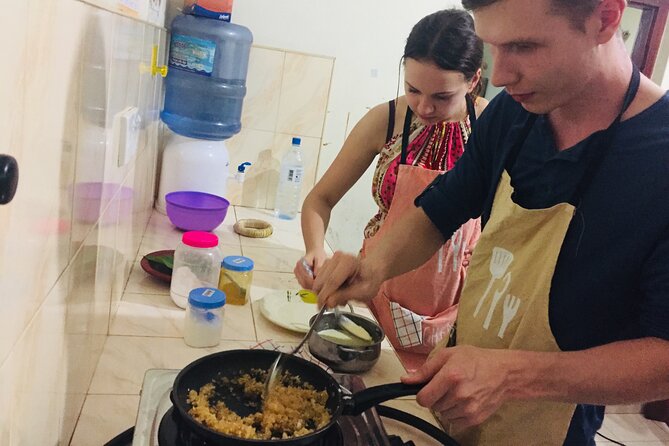
If you upgrade, you may add a market visit. The value here is simple: you learn how locals talk about spices, herbs, and everyday produce while you’re choosing ingredients. Instead of just selecting vegetables from whatever is available at the home, you learn where they come from and what people look for.
That doesn’t mean the rest of the class is less authentic without the market stop. You can still choose vegetables and get spice education in the kitchen. But the market add-on can make the learning feel more connected, especially if you like shopping, asking questions, and learning names of herbs and produce.
If you hate time-consuming detours, keep in mind the market visit is an upgrade with extra steps. Still, for ingredient geeks, it can be the part that turns the cooking skills into a deeper understanding.
Price and Value: What $45 Buys You in Real Cooking Skill
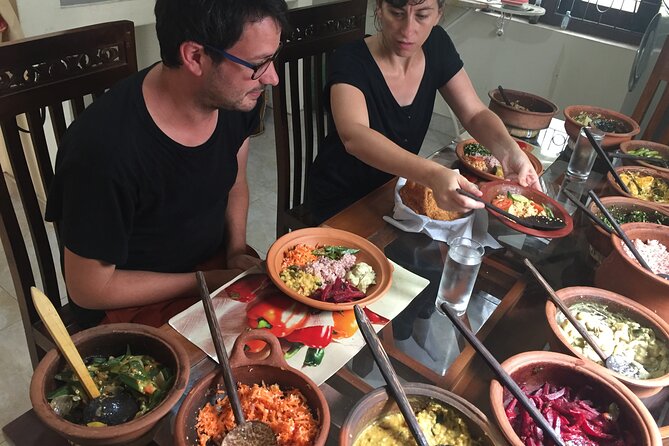
At $45 per person for about 3 hours, this class is priced in the “worth it” zone if your goal is real technique, not just a fun afternoon. You’re paying for three things that are hard to replicate on your own:
First, you get a private family-home teaching setup. That means someone is watching you cook, not just explaining from the side.
Second, you learn foundational Sri Lankan flavor work—coconut milk, curry cooking logic, spice and herb handling—plus rice and additional dishes. This is more than a single-dish workshop.
Third, you eat your results immediately as dinner. That’s part of the tuition. You’re not leaving hungry or forced to improvise dinner plans afterward.
The experience also uses a mobile ticket, and confirmation is received at booking time. In practical terms, that reduces last-minute admin stress while you’re traveling.
And here’s the timing/value sweet spot: it’s booked about 36 days in advance on average, but people have reported booking with less than 24 hours notice and still being welcomed at the door. So if your schedule is flexible, it’s not only for planners.
Who This Cooking Class Best Fits (And Who Might Skip)
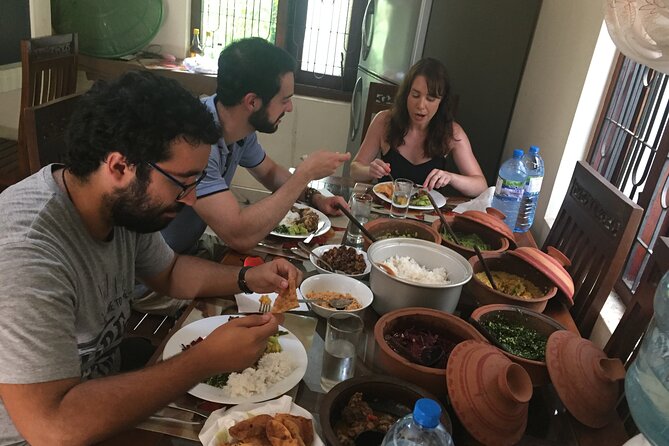
This is ideal if you want a grounded, local-style cooking lesson in Negombo, with dinner built in. It suits both non-veggies and veggies, since you can choose vegetables for your curry and you’ll learn how local seasoning and cooking methods work across options.
You’ll likely enjoy it most if:
- You like hands-on cooking and don’t mind getting involved in chopping and prepping
- You care about coconut milk and spice methods, not just eating something tasty
- You want a private experience where questions are welcome
- You’re looking for something more authentic than a hotel cooking demo
You might reconsider if:
- You strongly want written recipes and lots of take-home instruction (the focus is on learning directly while cooking)
- You dislike weather-dependent plans. The experience requires good weather, and that can matter more if you’re hoping for the market-style upgrade experience
- You only want a short, low-effort activity. This is active cooking, not passive sightseeing
Quick Tips Before You Go
- Wear comfortable shoes. You’ll be working in a home kitchen environment and moving around.
- Plan to stay present. Chopping, spice steps, and cooking all happen inside the 3-hour window.
- If you’re picky about vegetables, think ahead about what you want in your curry. You’ll be choosing as part of the process.
- Bring questions. The spice and herb explanations are where the learning payoff happens.
Should You Book This Cooking Class in Negombo?
If you want a Sri Lankan cooking experience that feels like dinner with real hosts—not a staged lesson—this is a strong choice. The private family-home format, the hands-on coconut milk and curry learning, and the fact that you eat what you cook make the $45 feel more like skill-building than entertainment.
Book it especially if your trip needs one day that’s practical and human: tea or coffee welcome, spices explained as you cook, vegetables prepped by you, and a traditional dessert at the end. If that sounds like your idea of a good evening, you’ll likely be happy you scheduled it.
FAQ
Where is the cooking class located, and where does it end?
It starts at Negombo Cooking Class, Andiambalama Katunayake, Negombo 11450, Sri Lanka. The activity ends back at the meeting point.
How long is the experience?
The cooking class and dinner last about 3 hours.
Is this a private tour or shared group experience?
This is a private tour/activity. Only your group will participate.
Is there a welcome drink?
Yes. You’ll have a cup of tea or coffee as a welcome drink.
What do I cook during the class?
You’ll learn to prepare coconut milk, curry, rice, and other treats, then enjoy the meal. A traditional dessert is also included.
Can I choose vegetables for my curry?
Yes. You can choose which vegetables you want to make as curry, and you’ll cut and chop them yourself.
Do I learn about Sri Lankan spices and herbs?
Yes. You’ll get an idea about Sri Lankan spices and herbs and then learn how to cook with them.
Is there an optional market visit?
There is an optional upgrade that adds a market visit so you can choose vegetables and hear about local spices and herbs.
Is the experience suitable for vegetarians and non-vegetarians?
It’s described as ideal for both non-veggies and veggies.
What’s the weather and cancellation situation?
The experience requires good weather. It also offers free cancellation if you cancel at least 24 hours in advance for a full refund.
More Hands-On Negombo Sessions
- Cooking Class and Market Visit in Negombo
★ 5.0 · 4 reviews - Oleena cooking class
★ 5.0 · 3 reviews
One More Curry Pot
- Negombo Private Tour: Market, Temples & Canal
★ 4.9 · 15 reviews - Cooking Class and Market Visit in Negombo
★ 5.0 · 4 reviews - Oleena cooking class
★ 5.0 · 3 reviews
Just added to the Negombo pages






Market & Curry Cooking Classes, compared.
 ★ 5.0Colombo Cooking ClassFrom $60151 reviews
 ★ 5.0Market Tour and Hands-On Cooking Class ColomboFrom $80140 reviews
 ★ 5.0Cooking Class Sri Lanka with LocalsFrom $40101 reviews
 ★ 4.7Colombo Cooking Experiance with Explore MarketFrom $3533 reviews
 ★ 4.9Negombo Private Tour: Market, Temples & CanalFrom $1915 reviews
 ★ 5.0Vegan Cooking Class Colombo with Market TourFrom $809 reviews
 ★ 5.0Authentic Sinhalese Cooking Class in Colombo with a Local FamilyFrom $1489 reviews
 ★ 5.03 hour cooking experienceFrom $608 reviews
Browse the lists this tour appears in