
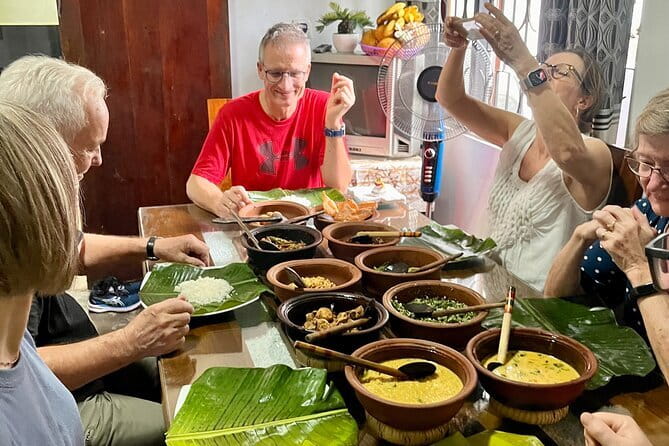
Reviewed · MARKET & CURRY COOKING CLASSES
Cooking Class Sri Lanka with Locals
A good meal starts with the right ingredients. This cooking class in Colombo takes you with Anu and Danuka into a local market first, then back to their home kitchen where you cook traditional dishes with natural, local spices.
I especially like the market ingredient shopping part, because it turns cooking into something you can repeat at home. I also like that you’re taught in a real family home setting with guidance from the host’s wife and mother, which makes the whole thing feel more practical than showy. The main drawback to consider is that the experience depends on good weather, since the ingredient hunt is outdoors.
In This Review
- Key highlights you’ll care about
- Why this Colombo cooking class starts in a local market
- Meet Anu, Danuka, and the family kitchen guidance
- The spices lesson: natural, local, and seriously practical
- What you’ll eat: lunch and dinner you help make
- The itinerary flow inside Colombo home cooking
- Timing flexibility and the 4-hour reality check
- Price and value: $40 with pickup and two meals
- Getting there and leaving: pickup included, drop-off not included
- Weather and comfort: when the market matters
- Who should book this cooking class in Colombo?
- Should you book Cooking Class Sri Lanka with Locals?
- FAQ
- How long is the cooking class?
- What’s included in the price?
- Do they pick you up in Colombo?
- Is this class private?
- Is drop-off included after the class?
- What if the weather is bad?
Key highlights you’ll care about
- Market shopping with Anu and Danuka to pick produce and sample local fruit before cooking
- Family-guided lessons with the host’s wife and mother helping you cook step by step
- Natural spices, no artificial additives focus, so flavors make sense and ingredients stay simple
- Two full meals included (lunch and dinner) that you help prepare
- Pickup by air-conditioned vehicle for an easier start in Colombo
- Private group format so your class stays focused on your people, not a crowd
Market-to-table cooking classes worth a morning
- Market Tour and Hands-On Cooking Class Colombo★ 5.0 · 140 reviews
- Cooking Class Sri Lanka with Locals★ 5.0 · 101 reviews
- Colombo Cooking Experiance with Explore Market★ 4.7 · 33 reviews
- Vegan Cooking Class Colombo with Market Tour★ 5.0 · 9 reviews
- Authentic Sinhalese Cooking Class in Colombo with a Local Family★ 5.0 · 9 reviews
Why this Colombo cooking class starts in a local market
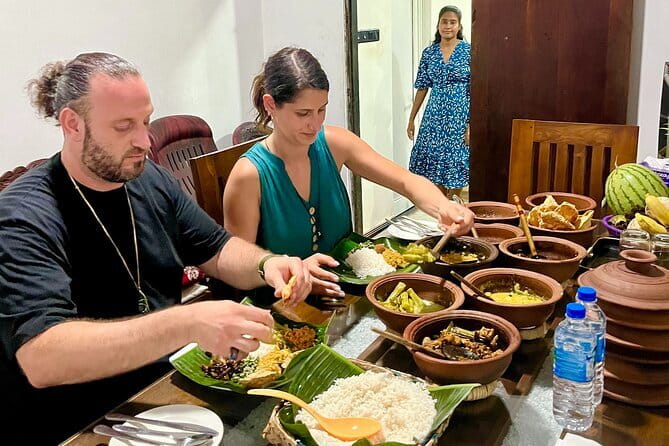
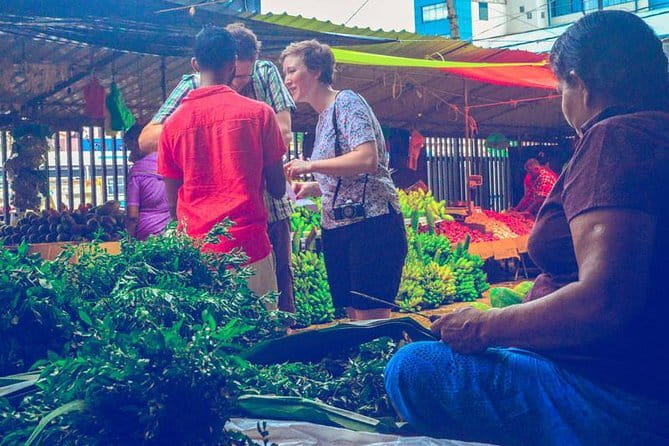
In Colombo, you could easily eat Sri Lankan food and still not know how it’s built. This class closes that gap by starting with the ingredients, not the apron. You head out with your hosts to a local market to handpick fresh produce, and you’ll also get a chance to sample fruits before you cook.
I like this approach because you learn the two skills that matter most. First, you learn how to choose fruit and vegetables by what looks right in the moment—ripeness, color, and overall quality. Second, you learn how those choices affect taste later, since cooking is basically chemistry with spices and timing.
One small detail that matters: it’s a family-run setup. That means the market visit isn’t treated like a photo stop. You’re there to pick ingredients for actual lunch and dinner, so you’ll get more “why this” and less “look at that.”
Practical tip: if you’re the type who loves food facts, come ready with questions. Ask what’s in season, what they buy for everyday cooking, and what they’re thinking about when they choose a coconut-heavy ingredient.
Meet Anu, Danuka, and the family kitchen guidance
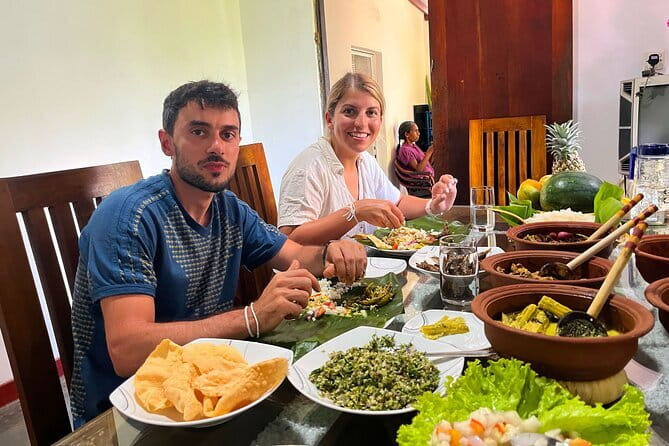
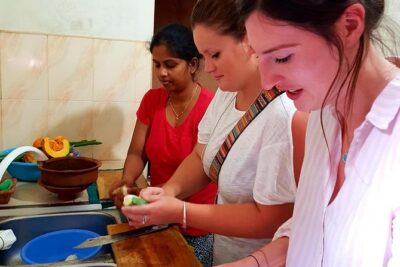
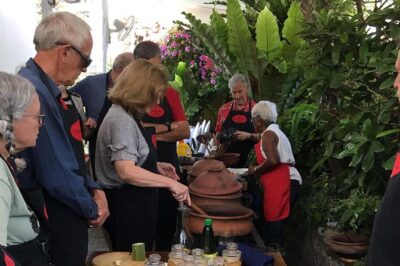
You’re not just watching someone cook. You’re learning inside a Colombo home with the people who actually make this food day to day. The class is guided by Anu and Danuka, along with their family kitchen support—specifically the host’s wife and mother—so you get more than one cooking perspective.
That family setup changes the whole feel. When food instruction comes from multiple generations, you tend to get the small habits that never show up in restaurant versions. You’ll also hear practical adjustments, like what to do when an ingredient isn’t perfect, or when a spice blend needs a lighter hand.
In the reviews info you were given, the name Danuka and his family show up again and again in the context of effort and warmth. One standout theme is that they guide you through more than just the recipe steps. They also talk about the thinking behind Sri Lankan cuisine—how ingredients like coconut are central rather than optional.
I’m also glad the home is described as clean and hygienic. That matters when you’re mixing hands-on cooking with fresh ingredients. You don’t want to spend half the class worrying if the process is safe and comfortable.
A heads-up on expectations: you’re in a private group, so you can ask more, but you should also be ready to follow the family flow. These lessons run on real timing—ingredients need attention, and dishes need staging.
The spices lesson: natural, local, and seriously practical
Sri Lankan cooking is built on spice. But what makes this class useful is the way it frames spices as tools, not tricks. You cook using traditional methods and natural local spices, and the process is described as free from artificial additives.
That “no artificial additives” detail is more than marketing language. It usually translates into a clearer learning experience for you. You can understand what each flavor is doing—heat, aroma, tang, and richness—without needing to reverse-engineer a supermarket shortcut later.
One message that comes through strongly in the experience info is that the hosts show how “less is better” in certain moments. That’s a big deal if you’ve ever cooked with too much spice and ended up with one-note heat. Here, the lesson is about balance.
And coconut gets its own spotlight. One review notes learning that coconut is like the life blood of the cuisine, and that kind of explanation sticks. If you’re used to thinking of coconut as a dessert ingredient, this teaches you to see it as structure: texture, thickness, and that unmistakable richness that shows up in many savory dishes.
Practical tip: when you’re cooking at home afterward, don’t treat spices as an all-or-nothing thing. Think in layers. Start with the base aroma, taste as you go, then adjust gently.
More hands-on Colombo sessions to sit in on


What you’ll eat: lunch and dinner you help make
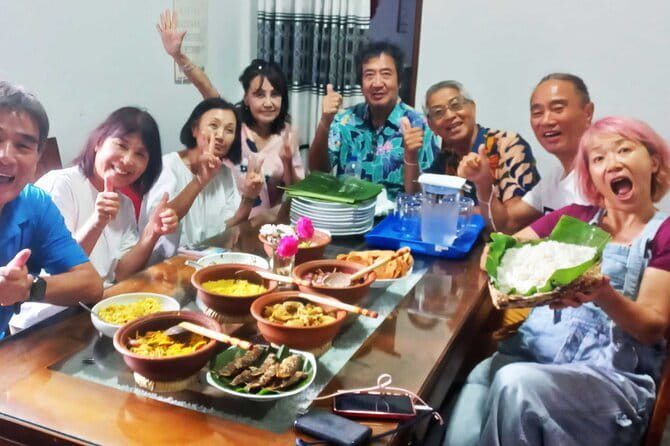
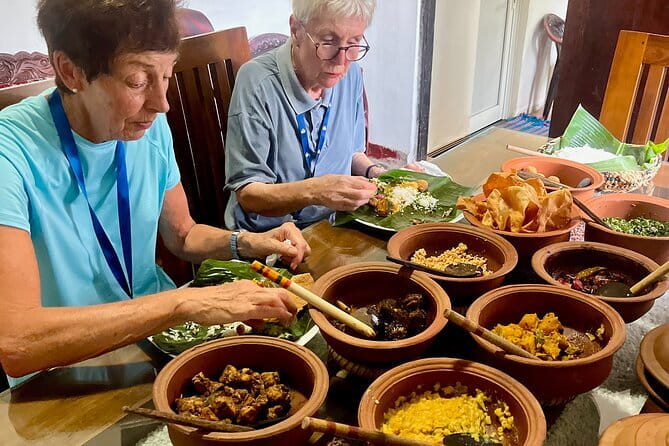
This class includes lunch and dinner, and the best part is that you’re not just fed. You’re part of the process that creates both meals. That turns the class into an actual day of food, not a quick demo followed by a snack.
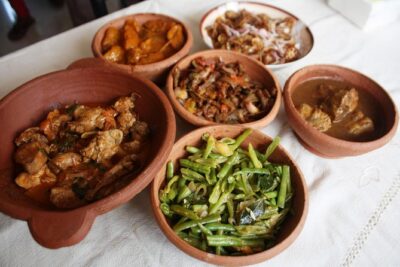
Because the exact menu dishes aren’t listed in your data, I won’t pretend we can name every recipe in advance. What I can tell you from the structure is this: the class is designed around traditional Sri Lankan cooking, built from the ingredients you select during the market visit and then assembled in the family home.
You’ll likely get a mix of savory dishes that rely on local spices, plus coconut-based richness, since that comes up repeatedly in the reviews you provided. You’ll also see how ingredients move from raw selection to a finished plate without relying on packaged flavor boosters.
I also like the pacing. A 4-hour class that includes two meals has to be organized. That usually means you’ll learn practical shortcuts—like what to prep first, what can wait, and how to time dishes so lunch and dinner don’t collapse into one long mess.
If you’re food-hungry: go into this class with an appetite and a good attitude toward learning by doing. The meals feel like the reward for your work, not a separate “included lunch” that you barely notice.
The itinerary flow inside Colombo home cooking
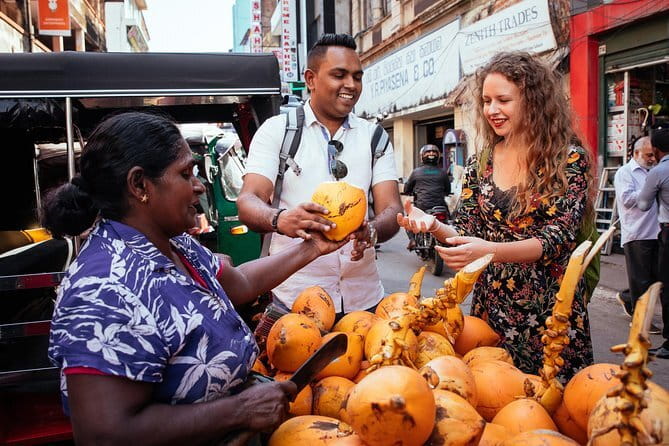
Here’s how the experience tends to play out, based on the details you have:
1) Pickup in an air-conditioned vehicle
You get picked up for the experience. For Colombo, this matters more than you might think. Roads and traffic can be unpredictable, and arriving sweaty or flustered kills the mood for a hands-on class. Having pickup included makes the start calmer.
2) Local market ingredient picking
Next comes the market segment. You handpick produce for the day’s cooking and sample local fruits. This is where you build “ingredient memory,” so the cooking later doesn’t feel like magic tricks.
3) Back home with the family kitchen team
Then you move into the host’s home kitchen with Anu and Danuka, plus their wife and mother support. You cook traditional dishes using natural spices, with an emphasis on cleanliness and safe comfort in the home.
4) Lunch and dinner on your schedule
Meals are part of the lesson. Lunch happens first, then dinner later. The class length is around 4 hours (approx.), so the cooking is focused and planned.
What’s the advantage of this flow?
You’re seeing the full chain: ingredient choice → spice handling → cooking results → eating what you made. That’s the kind of structure that helps you recreate flavors later without needing a Sri Lankan restaurant in your city.
Possible consideration: because the market part is outdoors, you should be ready for weather-related changes if conditions aren’t good.
Timing flexibility and the 4-hour reality check
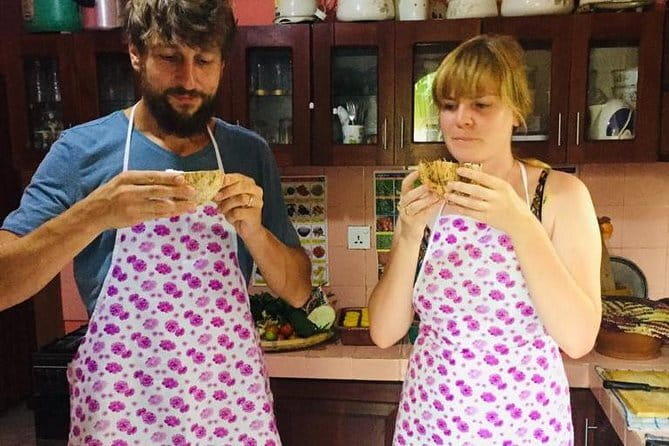
You can select your preferred timing for the class activity, which is a big win if your Colombo day is already packed. A flexible start lets you fit the market and cooking into your sightseeing plan without forcing the rest of your day to bend.
The duration is about four hours, and that’s important context. This isn’t a “learn everything about Sri Lankan cuisine” marathon. It’s a concentrated teaching experience built around a market shopping run and two meals. If you want depth on spice theory, you’ll still get plenty through cooking steps and tasting, but you won’t leave with a complete cookbook worth of instruction.
Also, the group size is private—your group only. That keeps it personal, but it can also mean you may be expected to stay engaged the whole time. If you’re hoping to relax while someone else does the work, you might find it more active than you expect.
Practical tip: if you’re traveling with a tight schedule, pick a time that isn’t directly between major transit legs. The cooking portion and meals mean you’ll want time to settle after.
Price and value: $40 with pickup and two meals
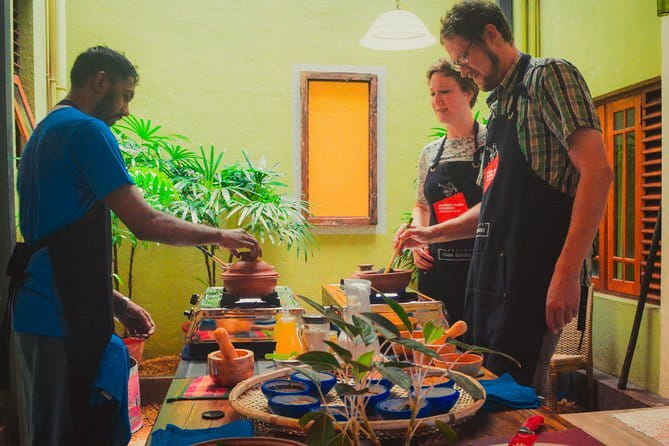
At $40 per person, this class can look surprisingly fair once you break down what’s included. You get:
- Air-conditioned vehicle pickup
- Lunch and dinner
- A market ingredient tour with sampling
- Hands-on cooking guidance from a local family
In practical terms, $40 is buying a whole afternoon/evening of instruction plus food plus local context. If you’ve ever taken cooking classes that feel like a “nice tasting event” with one dish, this isn’t that. The class is built around real meals and ingredient sourcing, which is harder to fake and usually takes real effort.
There are also group discounts, which can help if you’re traveling with friends or family and want everyone learning together.
Who gets the best value?
- Food lovers who want to cook with real spices, not just collect restaurant tips
- People who like culture through daily life—homes, markets, family routines
- Anyone who wants a meal-heavy experience that doesn’t end at the first course
Getting there and leaving: pickup included, drop-off not included
Pickup is included, and that’s your main transport help. But drop-off isn’t included. The good news is you can handle leaving easily by taxi or rideshare services like Uber or PickMe, and the operator says they’re happy to help you arrange it.
The experience is also listed as near public transportation, which gives you a backup if you prefer not to rely on rideshare.
Practical tip: after dinner, make sure you agree with your host on where you’ll be picked up or what your easiest route is for the next leg of your day. That keeps you from turning a great cooking finish into a small scavenger hunt.
Weather and comfort: when the market matters
This experience requires good weather. That’s likely because part of the class is tied to the outdoor market and ingredient shopping. If weather turns unpleasant, the operator offers a different date or a full refund.
From a planning standpoint, you don’t need to obsess over forecast hour-by-hour. Just don’t book this as a “last minute gamble” on the absolute worst-weather window of your Colombo trip.
For comfort, you’ll be in an actual home kitchen, and the experience description emphasizes the home being clean and hygienic. That’s reassuring, especially for a hands-on cooking setup where you’ll be handling ingredients and moving around.
Who should book this cooking class in Colombo?
Book it if you want a hands-on food experience anchored in everyday cooking. It’s especially good for:
- Couples or solo travelers who like smaller, focused instruction
- Families or friend groups who want a private experience with meals included
- People who want to understand spice balance, including the role of coconut
Skip it if you want a purely sightseeing-style tour with minimal participation. This is an active cooking lesson: the fun comes from working with ingredients and cooking, not just watching.
Also, if you dislike outdoor market segments due to weather or crowd noise, choose a time that gives you a better chance of calm conditions.
Should you book Cooking Class Sri Lanka with Locals?
I’d book it if your goal is to come away with skills you can actually use. The market ingredient picking, the family instruction from Anu and Danuka, and the focus on natural spices without artificial additives make this more than a one-time meal. Plus, you’re getting both lunch and dinner for the price, with pickup included.
If your schedule is flexible, and you’re comfortable learning in a home kitchen setting, this is the kind of Colombo experience that turns into a memory you can taste again later.
FAQ
How long is the cooking class?
It runs for about 4 hours (approx.).
What’s included in the price?
Lunch and dinner are included, and pickup is included as well.
Do they pick you up in Colombo?
Yes. Pickup is included, and it’s done by an air-conditioned vehicle.
Is this class private?
Yes. It’s a private tour/activity, and only your group participates.
Is drop-off included after the class?
No, drop-off isn’t included. The operator notes it’s easy to arrange a taxi or use Uber or PickMe, and they can help you arrange it.
What if the weather is bad?
The experience requires good weather. If it’s canceled due to poor weather, you’ll be offered a different date or a full refund.
More Hands-On Colombo Sessions
- Colombo Cooking Class
★ 5.0 · 151 reviews - Market Tour and Hands-On Cooking Class Colombo
★ 5.0 · 140 reviews - Vegan Cooking Class Colombo with Market Tour
★ 5.0 · 9 reviews - Authentic Sinhalese Cooking Class in Colombo with a Local Family
★ 5.0 · 9 reviews - Cooking class in Srilanka
★ 5.0 · 8 reviews
One More Curry Pot
- Colombo Cooking Class
★ 5.0 · 151 reviews - Market Tour and Hands-On Cooking Class Colombo
★ 5.0 · 140 reviews - Colombo Cooking Experiance with Explore Market
★ 4.7 · 33 reviews - Vegan Cooking Class Colombo with Market Tour
★ 5.0 · 9 reviews - Authentic Sinhalese Cooking Class in Colombo with a Local Family
★ 5.0 · 9 reviews
Just added to the Colombo pages






Market & Curry Cooking Classes, compared.
 ★ 5.0Colombo Cooking ClassFrom $60151 reviews
 ★ 5.0Market Tour and Hands-On Cooking Class ColomboFrom $80140 reviews
 ★ 5.0Cooking Classes in Sri LankaFrom $45110 reviews
 ★ 4.7Colombo Cooking Experiance with Explore MarketFrom $3533 reviews
 ★ 4.9Negombo Private Tour: Market, Temples & CanalFrom $1915 reviews
 ★ 5.0Authentic Sinhalese Cooking Class in Colombo with a Local FamilyFrom $1489 reviews
 ★ 5.0Vegan Cooking Class Colombo with Market TourFrom $809 reviews
 ★ 5.03 hour cooking experienceFrom $608 reviews
Browse the lists this tour appears in